Sunday, November 30, 2014

Achilles on the Plains

Like Achilles, Roman Nose had stayed out of the morning battle, and like Achilles, his absence had been keenly felt by his warriors. The day before he had destroyed the charm of his sacred war bonnet. One of the taboos connected with it was that he must not eat food taken from the pot with an iron implement. At a feast given by the Sioux, Roman Nose ate meat served by a squaw with an iron fork. Tall Bull, his friend, called his attention to the error and urged him to take purification ceremonies at once. But that very night Forsyth's command was discovered and Roman Nose had no time for the ceremonies before the battle.

He stayed out of the first charge, saying he would die if he made it. But he was such a power that the other Cheyennes kept urging him. In mid-afternoon he suddenly decided to go into the fight. Putting on the war bonnet, he mounted. With a wave of his great arm, the giant summoned his warriors. A moment later they were charging. 

Forsyth's men fought this new danger desperately. At the dead run, Roman Nose thundered down upon them. Just before he reached the trenches, a shot from some bushes to one side, brought him crashing down. Jack Stilwell and two companions were hiding there. Roman Nose's followers scattered.

The place where Roman Nose fell was on the river bank. Painfully he dragged himself out of sight among the bushes. There was he found by his people and carried away. He died in the Cheyenne village that night.
- Paul Iselin Wellman, Death on the Prairie: The Thirty Years' Struggle for the Western Plains (1934) 

I read this account of the death of the great Cheyenne warrior Roman Nose more than 10 years ago, when I was a student at UCL. It stayed with me, although I could not remember the details of names and dates, so I was pleased to finally be able to locate the passage again on the internet.

Sunday, November 09, 2014

"But I Love...I Love All...All People..."


On 13 November 1989, six days after the fall of the Berlin Wall, Erich Mielke addressed the parliament of the German Democratic Republic in his role as Minister of State Security. When one member of the parliament objected to his use of the term "comrades" to address them, he replied "But I love...I love all...all people...".  The room could only laugh.

I know about Mielke, and about the above clip, because of Philip Kerr's novel Field Grey (2010).

Thursday, October 30, 2014

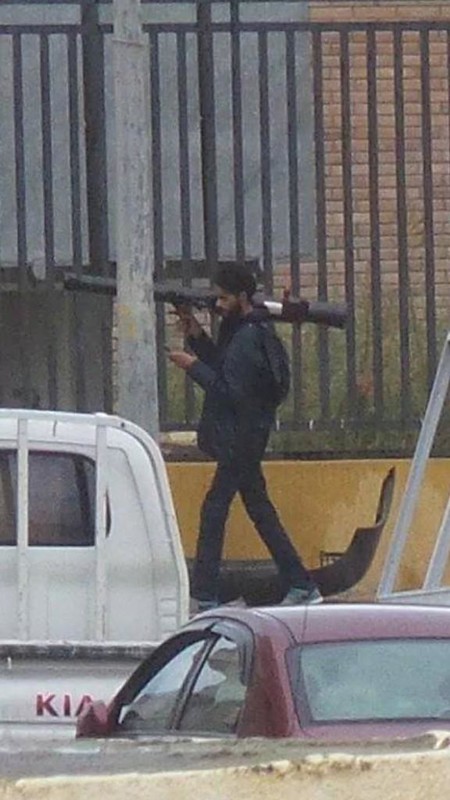
RPG LOL

RPG LOL

Taken in Libya, this is probably the best illustration of how 21st century insurgencies are fought. Image from the @Rekka_K Twitter account.

Tuesday, October 07, 2014

Computer Security


Monday, August 25, 2014

Dame With A W

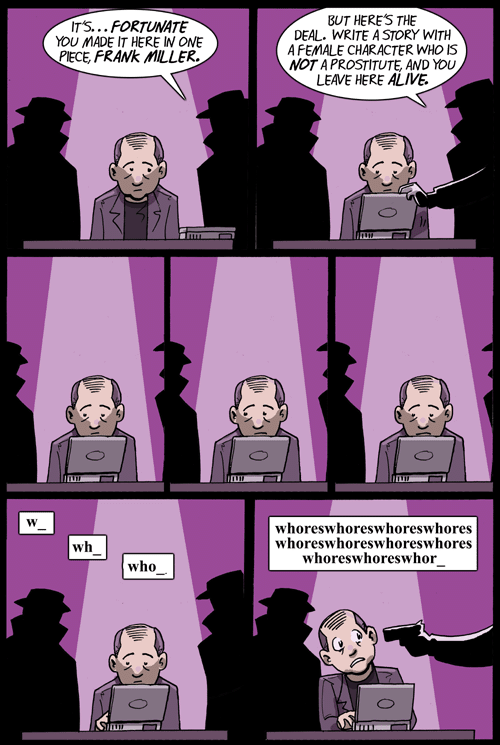
In honour of the release of Sin City: A Dame To Kill For, here's one of the finest moments from Shortpacked!:

Shortpacked on Frank Miller

Monday, July 28, 2014

Centenary

'I say, is it really true that the French artillery had to fire on their infantry?' Delaforce asked. 'To drive them over the top?'
'Absolutely,' Finlayson said. 'They had a mutiny. The troops wouldn't leave the trenches, so the French generals laid down a barrage on them. That soon shifted them.'
'What happened afterwards?'
'Afterwards? There was no afterwards. Why d'you think they didn't want to get out of the trenches?'
- Derek Robinson, Goshawk Squadron (1971) 

Thursday, July 17, 2014

A Storm In Macedonia

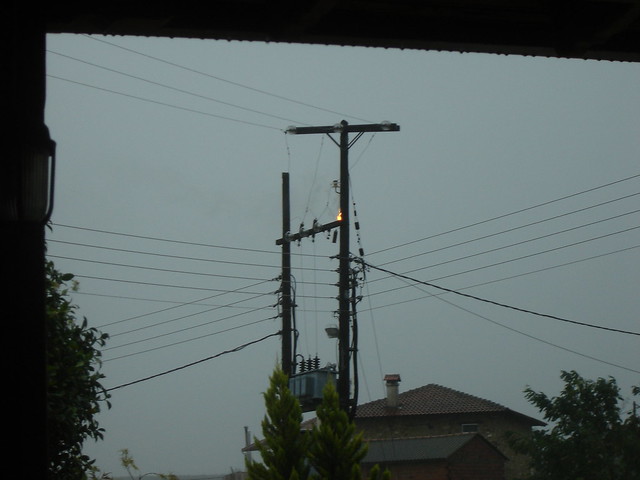
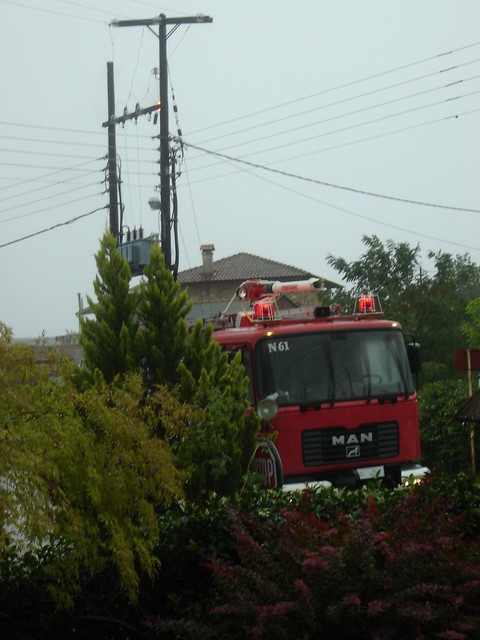
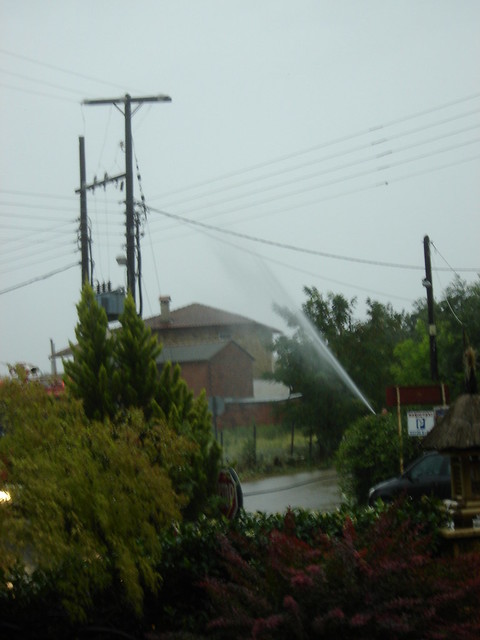
I'm currently at Olynthos in northern Greece, excavating on the Classical city site. On Tuesday we couldn't work because of torrential rain and a thunderstorm. During the storm, lightning struck the electricity pylon just across the road, about 20 metres from where I was sitting. The pylon was knocking out and a small fire started, which had to be put out by the local fire brigade. These are the photos I took of that:

Lightning Strike 1

Lightning Strike 2 

Lightning Strike 3

In terms of actual archaeology, we don't really have any features in the trench yet, but we have had a couple of interesting finds: a stone tool which might be prehistoric, but could also be the sort of thing a Classical potter might have used to burnish pottery, and a sling bullet which is almost certainly from the siege which destroyed Olynthos in 348 BC. This is my photo of the latter:

  Olynthos Sling Bullet

EDIT 27/07/14: I've taken the picture of the sling bullet down, both because it is unpublished archaeological material, and because we don't want to encourage looting on the site.

Sunday, June 22, 2014

Kohima-Imphal

While the 70th anniversary of D-Day got fairly extensive coverage recently, I've seen pretty much nothing about the fact that it's also 70 years since the battle of Kohima-Imphal, the most significant battle of the Second World War in south-east Asia. It's not too difficult to discern the difference in coverage, as fighting to liberate France from the Nazis has very different connotations to fighting in order to keep Burma British.

Nonetheless I feel I should mention it, as my grandfather on my Dad's side was there, with the 2nd battalion of the South Lancashire Regiment. This article suggests that there are now only three surviving members of the Burma Star Association, although, of course, the vast majority of Commonwealth troops in the battle were Indian. Also, Dad tells me that Grandad never actually joined the Burma Star Association, believing it to be full of clerks and other rear-echelon types.

Friday, June 06, 2014

I Survived Able Archer 83

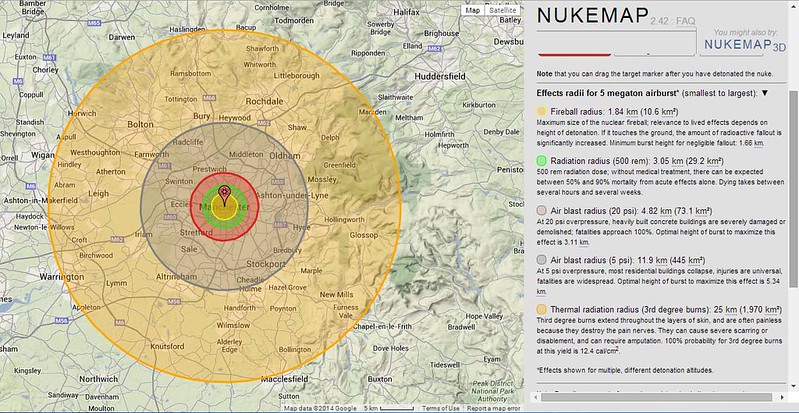
Borrowing a trick from Blood & Treasure, an article over at the Guardian suggests that Manchester was destined to be the recipient of "one or two 'airbursts' of up to five megatons" in the event of war with the Soviet Union. The Nukemap website suggests the following effects for a five megaton airburst over Manchester:

nukemap

Heaton Chapel is just to the north-west of Stockport, so I don't fancy two year-old me's chances very much.

Friday, May 30, 2014

Minimum Wage

J.T. once asked me what sociologists had to say about gangs and inner-city poverty. I told him that some sociologists believed in a "culture of poverty" - that is, poor blacks didn't work because they didn't value employment as highly as other ethnic groups did, and they transmitted this attitude across generations.

"So you want me to take pride in the job, and you're only paying me minimum wage?" J.T. countered. "It don't sound like you think much about the job yourself."
- Sudhir Venkatesh, Gang Leader for a Day: A rogue sociologist crosses the line (2008)

Saturday, April 05, 2014

Coup Leader Kills Himself

Nirvana in London, 1991

Monday, March 31, 2014

Writing Terror

So for various reasons, I've recently been investigating what's been written about the European terrorism of the 1970s/1980s. One of the things which is striking is how the "terrorist memoir" seems to be a niche sub-genre these days. This year one of November 17 published Γεννήθηκα 17 Νοέμβρη, but there are a couple of efforts from Baader-Meinhoff and other German groups, and the occasional Red Brigader. Even Britain gets in on the act with Stuart Christie's Granny Made Me An Anarchist. What's curious is that even though right-wing terrorist groups were pretty prominent during the same period, they don't seem to be represented in the memoirs market, and I'm wondering why that is. Lack of the literary/intellectual tradition that the left has? Publishers less sympathetic? Something else?

Friday, February 28, 2014

The Wrong Kind of Cynicism

And, vexingly for Eric, on the rare occasions he’s convinced a journalist that the CIA murdered his father, the revelation has not been greeted with horror. One writer declined Eric’s invitation to attend his press conference saying, ‘We know the CIA kills people. That’s old news.’
In fact, Eric told me, this would be the first time anyone had ever publicly charged the CIA with murdering an American citizen.
‘People have been so brainwashed by fiction,’ said Eric as we drove to the local Kinko’s to pick up the press releases for the conference, ‘so brainwashed by the Tom Clancy thing, they think, “We know this stuff. We know the CIA does this.” Actually, we know nothing of this. There’s no case of this, and all this fictional stuff is like an immunization against reality. It makes people think they know things that they don’t know and it enables them to have a kind of superficial quasi-sophistication and cynicism which is just a thin layer beyond which they’re not cynical at all.’
- Jon Ronson, The Men Who Stare at Goats (2004)

The story of Eric's father, Frank Olson, and why he may have been murdered, can be found here, as well as in Ronson's book.

Saturday, January 25, 2014

Bleak Mouse


I think I preferred it when you were into opium, Micky.

Tuesday, December 31, 2013

The Road Warrior


This is a homemade armoured vehicle being used by the Kurdish YPG militia in north-east Syria (the photo is from the Avashin Twitter account). It's interesting to wonder about the influence of films like Mad Max on this, although improvised armoured fighting vehicles date back to the Spanish Civil War.

Monday, December 16, 2013

The 嫦娥 Has Landed

A video of the Chinese "Jade Rabbit" lander touching down on the Moon. As various people on the internet are pointing out, if you're under 37, these are the first pictures taken on the surface of the Moon during your lifetime.

Friday, November 22, 2013

Beaucoup Theories

There's supposed to be a half-dozen or six dozen or two dozen more fucking plots in the works, like the fucking assassination metaphysic is just out there too undeniably -


- James Ellroy, American Tabloid (1995)


Theories! We were almost lost in theories, there were so many of them.

- Inspector Frederick Abberline, lead investigator of the "Jack The Ripper" murders, quoted in Cassell's Saturday Journal, May 22nd 1892

Monday, November 18, 2013

Red Heat

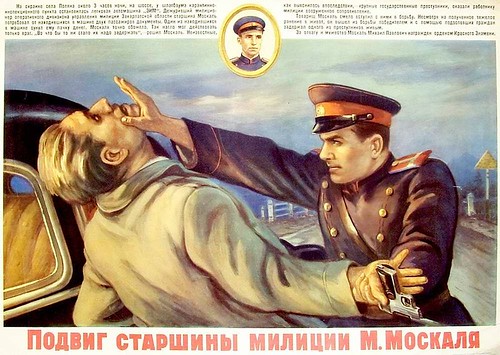
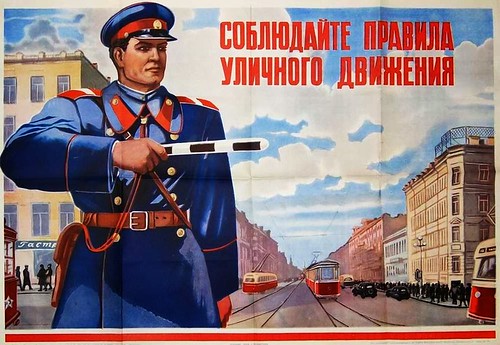
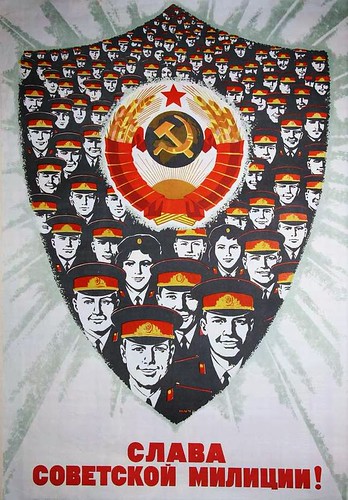
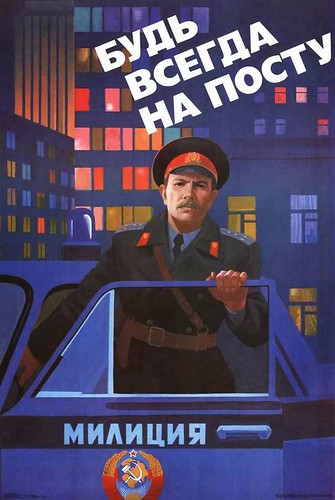
The Blog Vintage Everyday has some great Soviet police posters dating from the 1950s to the 1980s. Here are my favourites:

Soviet Police 1
TALK TO THE HAND!

Soviet Police 2
Soviet law enforcement was equipped with the MASSIVE SLEEVES OF JUSTICE.

Soviet Police 3
In fairness, this isn't much creeper than police posters I see in contemporary Britain.

Soviet Police 4
I would watch the hell out of this film.


Wednesday, September 25, 2013

ANTHROPOID

Up to now, the Nazis, if somewhat halfhearted in the concealment of their crimes, have nevertheless kept up a superficial discretion that has enabled some people to avert their gaze from the regime’s true nature. With Lidice, the scales have fallen from the whole world’s eyes. In the days that follow, Hitler will understand. For once, it is not his SS who will be let loose but an entity whose power he does not fully grasp: world opinion. Soviet newspapers declare that, from today, people will fight with the name Lidice on their lips – and they’re right. In England, miners from Stoke-on-Trent launch an appeal to raise money for the future reconstruction of the village and come up with a slogan that will be echoed all around the world: 'Lidice shall live!' In the United States, in Mexico, in Cuba, in Venezuela and Uruguay and Brazil, town squares and districts, even villages, are renamed Lidice. Egypt and India broadcast messages of solidarity. Writers, composers, filmmakers and dramatists pay homage to Lidice in their works. The news is relayed by newspapers, radio, and television. In Washington, D.C., the naval secretary declares: 'If future generations ask us what we were fighting for, we shall tell them the story of Lidice.' The name of the martyred village is scrawled on the bombs dropped by the Allies on German cities, while in the East, Soviet soldiers do the same on the gun turrets of their T34s. By reacting like the crude psychopath that he is (rather than the head of state that he also is), Hitler will suffer his most devastating defeat in a domain he once mastered: by the end of the month the international propaganda war will be irredeemably lost.

But on June 10, 1942, neither he nor anyone else is aware of all this – least of all Gabčík and Kubiš. The news of the village’s destruction plunges the two parachutists into horror and despair. More than ever, they are wracked by guilt. No matter that they have rid Czechoslovakia and the world of one of its most evil creatures – they feel as if they themselves have killed the inhabitants of Lidice.

No one ever manages to persuade them that Heydrich’s death was good for anything.

Perhaps I am writing this book to make them understand that they are wrong.

 - Laurent Binet, HHhH (2012)

Monday, September 02, 2013

A Gazely Stare


Now all I have to do is work out the single most unsettling place in the house to put it.
 

Wednesday, August 21, 2013

No One Here Gets Out Alive

Today the Londonist Twitter account asked people for the most ludicrous flats and houses they'd seen in the capital. Highlights included the following:


Tuesday, July 23, 2013

Nice Chaps, Aren't They? Picturesque...

In a column in this weekend's Spectator, "Taki" describes Greece's neo-fascist Golden Dawn as "good old-fashioned patriotic Greeks" who are "not house-trained, and many of its members tend to use rough language and get physical." I instantly knew what the column made me think of:
I've seen them all right. I was in sunny Italy when the Fascisti went for the Freemasons in twenty-five. Florence it was. Night after night of it with shooting and beating and screams, till you felt like vomiting. I was in Vienna in thirty-four when they turned the guns on the municipal flats with the women and children inside them. A lot of the men they strung up afterwards had to be lifted on to the gallows because of their wounds. I saw the Paris riots with the garde mobile shooting down the crowd like flies and everyone howling "mort aux vaches" like lunatics. I saw the Nazis in Frankfurt kick a man to death in his front garden. After the first he never made a sound. I was arrested that night because I'd seen it, but they had to let me go. In Spain, they tell me, they doused men with petrol and set light to them.

Nice chaps, aren't they? Picturesque...
- Eric Ambler, Uncommon Danger (1937)

Saturday, July 13, 2013

Monuments are for Defeats, as well as Victories

It's a decade since I started this blog, while I was an MA student living in north London - a period of 12 months which I count as one of the happiest times in my life. On that basis I felt that some sort of acknowledgement of the anniversary was appropriate. At the same time, there's no doubt that if the version of me who started the blog in 2003 could see himself in 2013 he'd be disappointed, and rightly so.

Sunday, June 30, 2013

The Assassination of Abraham Lincoln Considered as a Gameshow


The best use of the only surviving witness to the Lincoln assassination is surely as a turn on a light-entertainment panel show. I'd say that this is the sort of thing that could only happen on 1950s TV, but I reckon it could easily happen now, too.

Thursday, May 30, 2013

The Ghostly Voices of a Distant War

Thanks to the Brown Moses Blog, I came across this video of intercepted radio communications from Qusayr, Syria. There's an English transcription of the conversation behind that link.


Thursday, May 23, 2013

Robust Defence

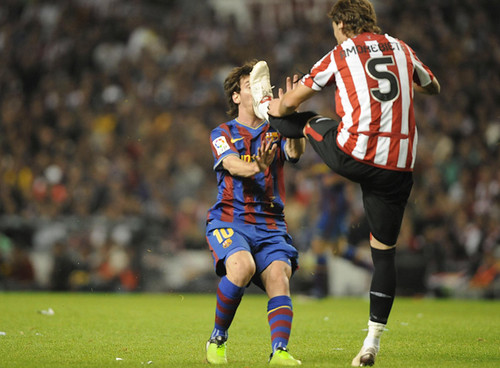
Fulham have just signed Fernando Amorebieta on a free transfer from Athletic Bilbao. This is how he opted to deal with the threat from Barcelona's Lionel Messi, arguably the best player in the world:

Amorebieta-Messi

Amorebieta received 11 red cards during his playing career in Spain. I look forward to seeing him in the Premier League.

Thursday, April 18, 2013

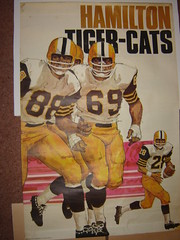
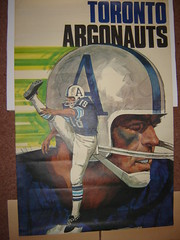
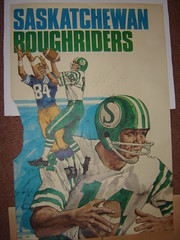
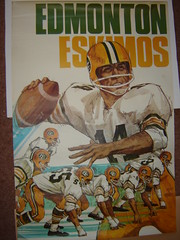
Canadian Football

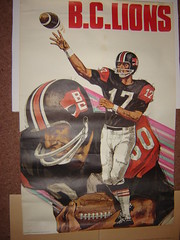
About 40 years ago my dad came back from being an MA student in Canada, bringing with him this set of posters for the teams in the Canadian Football League. I'm thinking of getting one framed for my wall. Let me know your favourites!

Montreal Alouettes Hamilton Tiger-Cats Toronto Argonauts
Saskatchewan Roughriders Edmonton Eskimos B.C. Lions

Monday, April 08, 2013

An Accident Waiting To Happen


Billy Bragg - An Accident Waiting To Happen (Live, 1992)

Monday, March 04, 2013

The Hero Bradford Deserves, But Not the One it Needs

We start carrying semi automatics, they buy automatics, we start wearing Kevlar, they buy armor piercing rounds, and you're wearing a mask and jumping off rooftops.

- Jim Gordon, Batman Begins (2005)

I'm not saying that we're definitely going to see someone dressed as a clown committing a series of anarchic crimes across south Yorkshire. I'm just saying that that's the logical progression.

Thursday, February 28, 2013

A Wacky Nuremberg

This week it's become apparent that a young fascist has ensconced himself at the University of Liverpool. He's used his Twitter account to invite people to ask him about his philosophy of "culturism" fascism. Craig Sinclair, lead singer of the band Lovecraft has asked the following questions:


Thursday, January 31, 2013

Materialising Class in the English Classroom

I'm currently doing work of different kinds at two universities in the north-west. At one, I notice a fair number of students using iPads or laptops in their lectures, and at the other I notice none at all. Have I stumbled on the emergence of some new form of class divide in English HE?

Monday, December 10, 2012

Men Who Hate Thrillers

I'm just back from a conference in Sweden, at which I was not once attacked by any bisexual-hacker-biker-Nazi-serial killers. There is a sense in which this is disappointing.

Friday, November 30, 2012

Skyfall

Daniel Craig is the best Bond ever, but it's on the basis of Casino Royale, not Skyfall. The latter is a film which works for every second of the time that Javier Bardem is on screen, and ambles around a bit aimlessly whenever he isn't.

There are also problems with what this film wants to be. The 50th anniversary hoopla means that it's trying to do a lot of things at once - part homage to the Bond films that people go on about as if Roger Moore was something to be proud of, part post-Bourne dark action thriller. It's on the latter front that it particularly falls down, coming over all multiple-personality as to whether the things that the security services get up to are bad or not. Bardem is great, but if he'd been allowed to be a villain who often tells the truth (like Bane in The Dark Knight Rises) the film would work a lot better. For all the talk about significant deaths in Skyfall, there's nothing here as powerful or moving  as Clive Owen's last words in the first Bourne film.

Skyfall is beautifully shot, and is much better than the incomprehensible low-stakes mess that was Quantum of Solace. But three films in and I'm still waiting for the Bond series that Casino Royale promised, one that was free of baggage like Moneypenny and Q (both of whom are reintroduced here). Some have suggested that with the 50th anniversary out of the way, the sequel I've been waiting for will be coming next. We'll see. 

Saturday, October 20, 2012

General Strike

The museum was closed on Thursday due to the general strike in Greece. This was good from the point of view of myself and Dave, because we were running a theoretical seminar at the Irish Institute, and it gave use extra time to prepare. When we went out for lunch at about 3, Exarchia was full of riot police, and we passed some protesters burning boxes in the street - I have no photos of any of this, for all the obvious reasons. This seemed pretty much par for the course, and it was only when I got messages from the UK asking how everything was that I realised the international media had been running a riot story - something must have happened within view of the bar at the Hotel Grande Bretagne, as the old joke goes.

The seminar went well, although it wasn't as like this as we'd hoped:


Walking back from a local bar after the seminar was over we encountered the remnants of some hours-old teargas trapped in a concrete overhang, so I can say that I have been very slightly teargassed. This is endlessly amusing to my dad, due largely to this song

Sunday, October 14, 2012

Raining, In The City Near The Sea

Tonight in Athens there's a thunderstorm over the hills to the east of the city. Proper forked lightening, too, which you see so often in the Mediterranean, but so rarely at home. It's something of a relief, as the hot weather here has been something of a shock to someone used to British Octobers - I caught the sun by walking through the city yesterday.

I've been in Athens for a week now, working as an assistant on a project in the archives of the National Museum. It's a great opportunity, and I'm hoping that I'm making the most of it.

The thing which most people reading this are probably wondering is what changes I'm seeing in the city due to the economic crisis. I'm not the best placed to answer that, unfortunately, as previously I've at best spent a couple of days in the city. I know that there were some riots on Monday, coinciding with Merkel's visit, but the only evidence I saw of that was a burned-out taxi by the museum the next day. Walking through Exarchia  the other night had a sort of 1980s dystopian feel to it (assisted by Bowie's "Heroes" blaring out from one of the bars), but Exarchia's probably always felt like that, being the main anarchist/punk/junkie area since well before the economic crisis began. There's also the matter of confirmation bias: to some extent, I see the city I want to see.

Over the weekend I've been down to the Kerameikos, the area just outside the main gate of ancient Athens, which was used as a cemetery from the Iron Age down into the Hellenistic and Roman periods. It's a nice site, as no-one seems to go there much, and it acts as a surprisingly quiet little park almost in the centre of modern Athens. One of my main highlights was seeing the wild tortoises which live down there. I even got to see a tortoise fight, which I think was inconclusive, as most tortoise fights probably are.

Today I went down to the new Acropolis Museum, which I've never had the chance to go into before. It's a really great building, although I'm not sure all of the material is displayed in the most useful way. And while I've never been much of a fan of Classical art (I prefer Hellenistic), the Parthenon Sculptures gallery is really good, displaying the material (mostly plaster replicas, of course...) around the outside of a rectangle the same size as that of the Parthenon. This is much better that how the British Museum displays its collection of the originals. The Museum's design also shines in the views you get of the acropolis from the gallery while you're viewing the sculptures.

I'm hoping to take in a football match while I'm here, so that might be my next post.

Sunday, September 30, 2012

LA Noire

Posting this month has been down, due mostly to the fact that I've liberated my sister's Xbox 360. The first game I played was LA Noire (a loan from Emily), one of the reasons I wanted to borrow the console in the first place. As might be expected, the period detail is immersive, down to 1940s comedies playing on car radios. The game's real selling point is the investigation mechanics, however, and I'm not aware of any game which has put as much effort into collecting evidence and then using it. It's not enough to suspect things, you have to actually prove that people are lying. Spotting lies is also crucial, thanks to the facial capture technology, which means you spot lies in the same way you will in day-to-day life.

My reservations with the game are twofold: it wasn't entirely clear to me how my results in cases actually affected the overall plot, which makes it feel a little bit like it's on rails - playing some of the cases again might give me a better idea of how true this feeling is. The second is that aspects of the metaplot seem underdeveloped: the dénouement in the "hunt for a serial killer" section is underwhelming, but more important are the relationships of the protagonist with women, which aren't really explored until late in the game. This matters in terms of the choices the protagonist makes, which are significant, but lack impact without a background context.

A minor quibble is that the game is in glorious technicolour: an optional mode allowing you to play it in expressionist, shadowy black-and-white would have been a nice touch. And despite my reservations about some aspects of the plot, LA Noire gets its noir ending spot on. I know that extra cases are available as downloadable content, and I suspect I'll be getting them sooner or later.

Friday, August 31, 2012

EVA

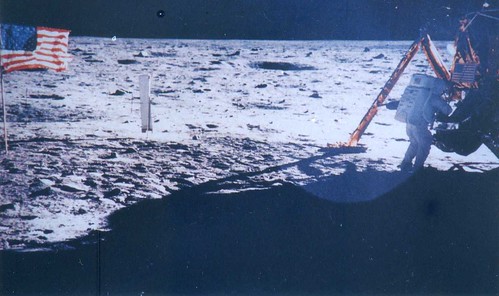
Neil Armstrong's death brought up some discussion of the fact that there are almost no photographs of him on the surface of the moon: most of the photography was assigned to Armstrong, so the pictures are of Aldrin, and it's very hard to tell two men in identical spacesuits apart (later missions added red stripes to the Commander's suit to help with identification). Thanks to my misspent youth collecting things to do with astronomy and spaceflight,  I do have a copy of one of the photographs identified as Armstrong, so here it is (the NASA designation is AS11-40-5886): 

NASA AS11-40-5886

Tuesday, August 28, 2012

Favela Democracy vs. Europe's Last Stalinist Dictatorship

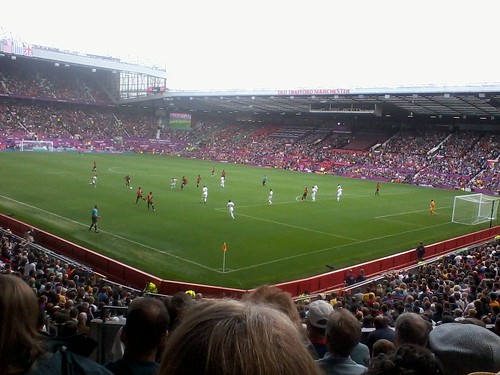
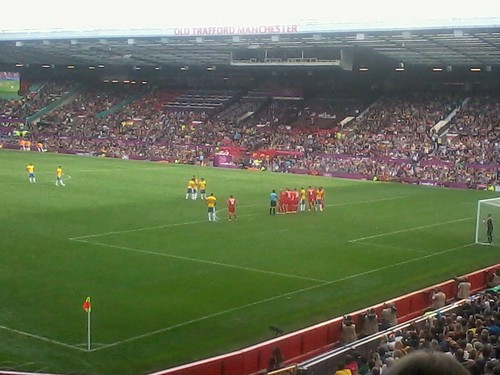
With the Olympics now over, it's safe for me to talk about my own experience of them - going to the Olympic football at Old Trafford. I got the tickets for me and my parents last year, when they were first released, thinking that there would be lots of football tickets and not many people would want them. Also, with Old Trafford so close, it seemed like the obvious thing to do.

You buy the tickets before it's known which teams will be playing, so when the games were finally announced I found out I'd be seeing Egypt vs. New Zealand and Brazil vs. Belarus. Obviously, I was pretty pleased at getting tickets for Brazil, particularly as Brazil use the Olympic team in building their squad for the next World Cup.

We went out to Old Trafford by tram, with plenty of other people going to the same place - including a Brazilian drummer. For future reference, a drum on a tram is only entertaining for the first five minutes, if that. What was interesting to see the array of football shirts and flags being displayed by people outside the ground - not just the teams that were playing, but people from all parts of the world. In what can only be a 21st century development, there were lots of Mancs in Brazil gear, and lots of Brazilians in Manchester United shirts.

Egypt and New Zealand were up first, and even though they were hardly the main attraction, the ground was pretty full for them. It was an entertaining game, set up nicely by the fact that New Zealand scored first, from one of their few attacks. As those who saw New Zealand at the last World Cup will know, they may not have much going forward, but they're tough to break down. And so it proved, although in point of fact the Egyptians had only themselves to blame, carving out masses of opportunities only to indulge in some comically bad finishing. While Egypt did get an equaliser close to the end of the first half, the pattern repeated in the second half, with a late opportunity to win the game badly squandered, to the particular ire of a group of Egyptian fans to my right.

Egypt On The Attack

Egypt on the attack.

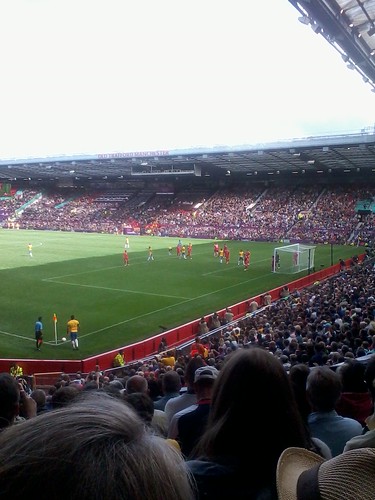
As might be expected, the stadium filled up more for the Brazil game. This included the seats directly behind us, which were occupied by a group of lads who had not turned up for Egypt vs. New Zealand, turned up late to Brazil vs. Belarus, moaned that it was not a premier league match, spent a lot of time talking about how drunk/coked up they were going to get afterwards, went early to/came back late from half time, and left before the end of the match. So they were arseholes, but they were authentic British arseholes, of the type that you can find in any given pub. Room should have been found for them in the opening ceremony.

Hulk Takes A Corner

Hulk takes a corner.

The game itself was great, and was once again made so by the fact that Belarus took an unexpected lead with a great header, which was celebrated by myself with some glee. It was unexpected, but not undeserved: they were playing far better than the Brazil team, with the expensive stars looking like they weren't all that interested. Brazil equalised a few minutes later with a real bullet of a header, but Belarus actually had several other opportunities to score in the first half. My favourite of these was when a Belarusian winger did his level best to replicate the magical 1984 goal John Barnes scored against Brazil, which just failed to come off.

Belarus continued to play well in the second half, but their attacking threat faded somewhat. Just after the hour-mark Brazil took the lead in a manner which pretty much sums up Brazil, to me: Neymar conned the referee into giving a free-kick just outside the area, then dispatched it brilliantly into the far corner. Belarus still played well, but it was pretty obvious that they weren't going to get back into it. The real Brazil highlight came three minutes into injury time, with Neymar releasing Oscar into the area with a backheel, resulting in a great goal. It was harsh on Belarus, who didn't really deserve to lose by two goals.

Free-Kick To Brazil

Free-kick to Brazil.

After this match, the teams took some surprising paths. From what we'd seen, we expected Belarus to easily beat Egypt and progress to the later stages, but they actually lost 3-1 to them, with Egypt going through. Brazil made the final, as expected, but then lost 1-2 to Mexico (the margin could have been much bigger). I was glad about that:  Brazil brought the same arrogant, under-motivated attitude to the final that they had to the game I saw.

This was, I realise now, the only competitive international football I'd ever been to, and  I really enjoyed it. Two games for £20 is very good compared to the Premier League, and probably stacks up quite well compared to the more popular Olympic events.

Tuesday, July 31, 2012

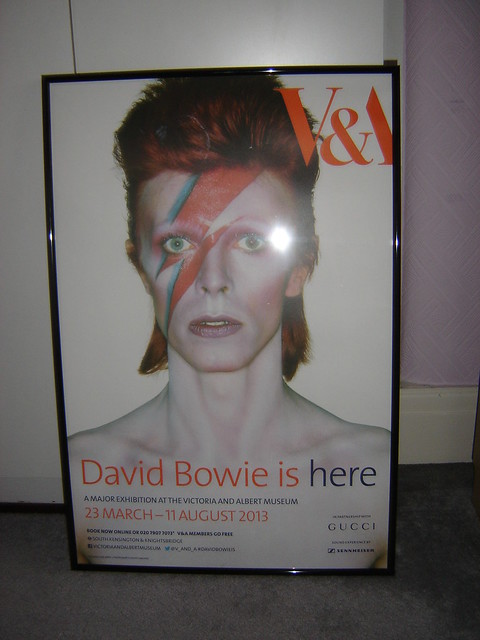
The Rise and Fall of Ziggy Stardust and the Spiders from Mars

Till there was rock, you only had God

- David Bowie, "Sweet Head" (1972)

There's always a bit of trepidation when you first approach something that's an acknowledged classic, and that's certainly how I felt before listening to Ziggy Stardust for the first time. Fortunately, it's as good as it's supposed to be. "Five Years" is a startling and bleak beginning to what is, after all, one of the definitive glam-rock albums. But it's for that reason that it's important, the nihilism lingering in your head and undercutting the rock-star hedonism that unfolds on most of the rest of the album - which is there in spades on tracks like "Moonage Daydream", "Hang On To Yourself", and "Suffragette City". In some ways it's strange that "Ziggy Stardust" is as low-key as it is, as you might imagine Ziggy's elegy to be more spectacular (although the Bauhaus cover version means that we have both ends covered). It's not an album without its weak spots: Doggett's book is correct in wondering what, exactly, "It Ain't Easy" is doing here, but it's a great album because it contains so much that's good, not because it's perfect.

It's also the case that a step-change here, in that while fame was the object of Hunky Dory, here it's very much the subject. Bowie is no longer content to look at fame from the outside, but to examine it at first hand. The major hurdle that had to be overcome was that David Bowie was not famous, and the key realisation was that fame could be constructed and worn, like a mask. One of the things that's so interesting about the whole Ziggy Stardust phenomenon is the role that performativity plays in it: Ziggy Stardust is a rock star because he tells you that he is, and because he does the things that you have come to expect from the cultural script of rock stardom (In 1972 the script was only about 15 years old, which makes it interesting that the Ziggy Stardust character was able to capture the concept so perfectly and prefigure so much of what was to come: in 1972 Elvis had Five Years left).

In some senses what seems most remarkable now is Bowie's decision to kill off the whole Ziggy Stardust mythology after only a year, at the height of his (now real) stardom. In some alternative universe there's a David Bowie who milked it for all he was worth, touring the world with The Spiders from Mars for 5-6 years, and who in 2012 is a mostly-forgotten piece of nostagic kitsch, like Alvin Stardust. The decision to kill off Ziggy was gutsy, and it resulted in Bowie being able to repeatedly change himself, and take an audience with him. Rock stars and identities are ephemeral, and if you've completely created yourself once, you can do it again and again.

Thursday, July 26, 2012

"You don't owe these people any more! You've given them everything!" 'Not everything. Not yet.'

On Sunday I went to see The Dark Knight Rises, before I ended up reading a review or finding out too much about it. My discussion here will CONTAIN SPOILERS, so avoid if you haven't seen the film yet. Also, it'll be a much better read if you know what I'm talking about.

My expectations were high, as I really liked The Dark Knight, but I feel they were fulfilled Getting a superhero film right is notoriously difficult, and the level of difficulty is increased when you've decided to use these archetypes to try and tell a serious story, and give the whole thing enough verisimilitude that you can suspend disbelief about characters like Batman or The Joker existing in what seems very much to be our world. It's a credit to Nolan that he's pulled this off, and has created a film which nicely rounds out the story he wanted to tell.

My favourite of the trilogy is still The Dark Knight, but The Dark Knight Rises is a close second. I feel Batman Begins is easily the weakest of the three. A somewhat weak first film with two good sequels is unusual, but that seems to be what happened.

There are a few comparatively minor things that I don't think completely work in The Dark Knight Rises. Given the running time, more time could have been spent showing us the kinds of inequality in Gotham which allow Bane to take over: as it is, one character tells us that it exists, but we never really get to see it. Similarly, when someone taken to what you've already set up as The Worst Prison In The World, the first thought of the viewer upon seeing it should not be "Oh, that seems all right". Apparently the thing in Room 101 that is the worst thing in the world is Tom Conti talking to you like a kindly uncle, which might be true, but is strange nonetheless.

I'm in two minds about the end. On the one hand, when Chekov's Autopilot finally goes off it seems like a bit of a copout, and makes the line I've used as my title ring a bit hollow. Nolan does deserve credit for making me think that he might actually Kill The Batman, though. Doing that would have left Michael Caine's Alfred with an unhappy ending, but maybe that's part of the price for saving Gotham? The ending which they went with is perfectly good, if perhaps a bit conventional.

Anyway, I really liked it. I still haven't read any reviews, so I can hunt those out and be told why I'm wrong, now.

Saturday, June 30, 2012

This Year's Present

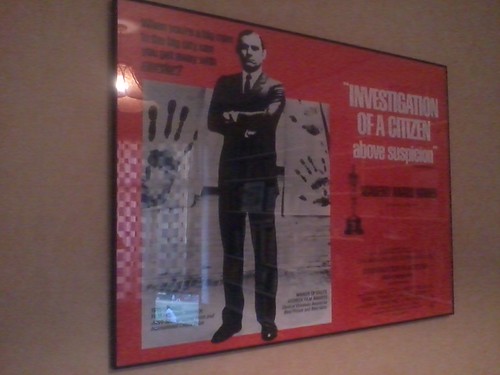
Poster


An original UK quad film poster for Investigation of a Citizen Above Suspicion (1970). It spent 40 years folded up before I got it from Amazon Marketplace. As my dad pointed out, this is probably the first thing I've bought that will get more valuable, although that's not why I bought it.

Monday, June 04, 2012

The Polished Surface of a Desk

A long time ago when I was writing for pulps I put into a story a line like "he got out of the car and walked across the sun-drenched sidewalk until the shadow of the awning over the entrance fell across his face like the touch of cool water." They took it out when they published the story. Their readers didn't appreciate this sort of thing: just held up the action. And I set out to prove them wrong. My theory was they just thought they cared nothing about anything but the action; that really, although they didn't know it, they cared very little about the action. The things they really cared about, and that I cared about, were the creation of emotion through dialogue and description; the things they remembered, that haunted them, were not for example that a man got killed, but that in the moment of his death he was trying to pick a paper clip up off the polished surface of a desk, and it kept slipping away from him, so that there was a look of strain on his face and his mouth was half open in a kind of tormented grin, and the last thing in the world he thought about was death. He didn't even hear death knock on the door. That damn little paper clip kept slipping away from his fingers and he just couldn't push it to the edge of the desk and catch it as it fell.
From a letter by Raymond Chandler, which I saw on Letters of Note.

Wednesday, May 23, 2012

Hunky Dory

The fact that "Changes" is the first song on Hunky Dory (1971) is a useful crutch for an unimaginative writer. So here goes: the album represents a remarkable change from The Man Who Sold The World, with the Hard-Rock/Proto-Metal of the latter replaced by the 1970s pop sound of folk-memory. This is the Bowie that starts playing in your head when someone says "David Bowie". This is an album which contains not only "Changes", but also "Life On Mars" and "Oh! You Pretty Things", demonstrating that this is the start of Bowie's most fertile period.

One of the interesting things about reading someone else's opinions on music is that you're suddenly confronted with things you've been mishearing for years. I'm pretty sure that I'm not the only one who thought it was "Turn to face the strain" rather than "Turn to face the strange" on "Changes", although I was perhaps alone in hearing "Now the workers have struck for vain/'cos Lenin's on sale again" rather than "Now the workers have struck for fame/'cos Lennon's on sale again" in "Life on Mars".

While the album represents a change of direction musically, the lyrical themes are very consistent with The Man Who Sold The World: transcending the limits of humanity, occultism (The Nietzschian "Homo Superior" of "Oh! You Pretty Things" is supplemented by a casual reference to Himmler on "Quickand", an early indication as to where the darker part of Bowie's psyche will be heading in a few years), and insanity. This is also an album about fame, and Bowie chooses to wear his influences on his sleeve, with songs explicitly about Andy Warhol and Bob Dylan, and "Queen Bitch" commonly reckoned to be about Lou Reed (although Doggett's book makes a persuasive case for it being a jealous swipe at Marc Bolan's new-found stardom).

So here's the mystery: it's a really good album, with some excellent songs, so why wasn't it a massive success? The single of "Changes" failed to make the Top 40, which is so improbable it makes your head spin. The answer may be the lack of a central strand: all the elements of Bowie's success are here, but there's a lack of a central something to make the diverse elements come together cohesively.

But something is coming...

Sunday, May 13, 2012

Halkyn

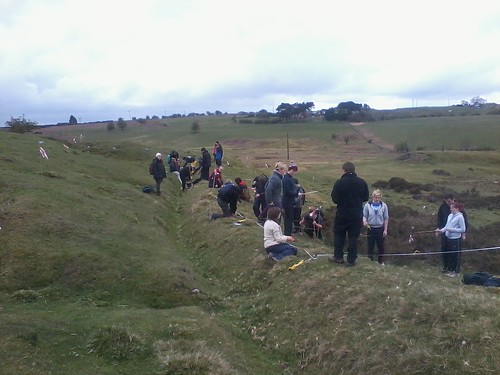
By way of proof that I do actually do archaeology sometimes:


Halkyn 1


Halkyn 2

Thursday, March 15, 2012

The Merry Widow

The hundred million self-confident German masters were to be brutally installed in Europe, and secured in power by a monopoly of technical civilisation and the slave-labour of a dwindling native population of neglected, diseased, illiterate cretins, in order that they might have leisure to buzz along infinite Autobahnen, admire the Strength-Through-Joy Hostel, the Party headquarters, the Military Museum and the Planetarium which their Fuhrer would have built in Linz (his new Hitleropolis), trot round local picture-galleries, and listen over their cream buns to endless recordings of The Merry Widow. This was to be the German Millennium, from which even the imagination was to have no means of escape.
- Hugh Trevor-Roper, The Mind of Adolf Hitler (1953)

The Guardian's acquisition of Bashar and Asma al-Assad's emails makes me wonder if anyone's ever done a sociological analysis of the material culture choices made by dictators. The Assads, like Hitler, seem to go for a fairly straightforward bourgeois consumerism - a banality of culture to go alongside the banality of evil. Gaddafi, meanwhile, went for the full-on Tony-Montana-in-Scarface aesthetic. Further datapoints are required to spin the concept out to book-length, of course.

Thursday, March 08, 2012

The Condition of Stockport

There is Stockport, too, which lies on the Cheshire side of the Mersey, but belongs nevertheless to the manufacturing district of Manchester. It lies in a narrow valley along the Mersey, so that the streets slope down a steep hill on one side and up an equally steep one on the other, while the railway from Manchester to Birmingham passes over a high viaduct above the city and the whole valley. Stockport is renowned throughout the entire district as one of the duskiest, smokiest holes, and looks, indeed, especially when viewed from the viaduct, excessively repellent. But far more repulsive are the cottages and cellar dwellings of the working-class, which stretch in long rows through all parts of the town from the valley bottom to the crest of the hill. I do not remember to have seen so many cellars used as dwellings in any other town of this district.
- Friedrich Engels, The Condition of the Working Class in England (1845)
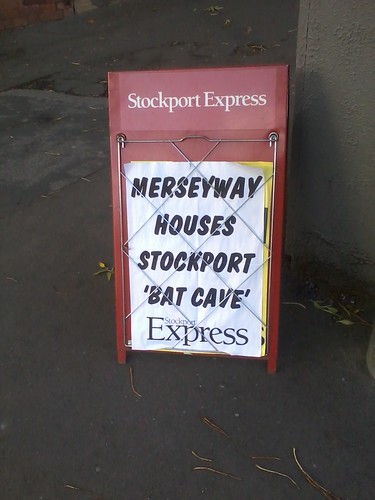
You have to wonder what he'd make of Merseyway, a piece of Le Corbusier-esque High Modernism which is increasingly inhabited by pawnbrokers shops. On the other hand, the description of it that I just gave tells you pretty much everything you need to know.

Wednesday, February 22, 2012

The Man Who Sold The World

This is the first of my pieces on David Bowie's 1970s albums, which I'm listening to and simultaneously reading about in Peter Doggett's book The Man Who Sold The World: David Bowie and the 1970s.

To someone who's main exposure to Bowie has been through singles compilations, this album, recorded in 1970, is something of a surprise. The glam-rock which made Bowie's name had yet to arrive, and we find ourselves very much at the tail end of the 1960s scene. The themes which would become Bowie trademarks: sexuality ("The Width of a Circle", "She Shook Me Cold"), violence ("Running Gun Blues"), madness ("All The Madmen"), the occult ("The Supermen") and dystopian futures ("Saviour Machine") are all present. The melodies themselves, however, are very much in the psychedelic rock/hard rock/acid rock/heavy rock which is pretty standard for the time. Going by Doggett's account, Bowie was never fully invested in the album, and much of it was created by other members of the production team

The one exception to this is the title track, which looks back in capturing something of the alienated deep-space chill of Bowie's only previous hit single "Space Oddity" (1969), and fits with the Bowie of the future in that it demonstrates his ability to give you something which sounds like nothing you've heard before. It's perhaps also the only song on the album in which the melody really matches the lyrical content. The latter is perhaps the bleakest thing this album has to offer, acting as a prescient commentary on the 1960s counter-culture, and perhaps on Bowie's fears about himself and his identity: everything you believe in is going to be sold out - and you're going to be the one who does it. Troubling stuff for someone who was only 23 when this was written and recorded, but we all have our moments.

So, this isn't destined to be one of my favourite albums, but it's an interesting look at the background from which Bowie's most successful period emerged. Next up: Hunky Dory.

Thursday, February 02, 2012

Belief

Belief


Delamere Street, Chester, January 2012.

Tuesday, January 17, 2012

1980s Science-Fiction Was Never Knowingly Under-Bleak

1995
After a period of increasing tension and escalating border incidents, full-scale war erupted between the Soviet Union and the People's Republic of China.
...
On October 7th, 1996, the Bundeswehr crossed the border between East and West Germany and began attacking Soviet garrison units still in the country.
...
While the political leadership of the European members of NATO debated the prudence of intervention, the U.S. army crossed the frontier.
...
1997
...On July 9th, with advanced elements of the 1st German Army on Soviet soil, the Red Army began using tactical nuclear weapons.
...
1998
The winter of 1997-98 was particularly cold. Civilian war casualties in the industrialized nations had reached almost 15% by the turn of the year, but the worst was yet to come. Communication and transportation systems were non-existent, and food distribution was impossible. In the wake of nuclear war came famine on a scale previously undreamed of...Plague, typhoid, cholera, typhus, and many other diseases swept the world's population. By the time they had run their courses, the global casualty rate would be 50%.
- Twilight: 2000 Referee's Manual (1984)

I downloaded the pdf of this a few years ago as part of an RPG Day promotion. It's eerie to think that people were sitting down to play this game at a time when the above seemed like a future that was more likely than not. The suggested campaign is pretty interesting, being Xenophon's Anabasis transposed to post-nuclear central Europe. If I can ever get a group together, I may even run it. I probably wouldn't use the original rules, as they're a bit too early 80s for me. I could probably kitbash something together based on  Reign, though.

Tuesday, January 03, 2012

An Experiment With An Artist

Bowie, in particular, in a series of 'camp' incarnations (Ziggy Stardust, Aladdin Sane, Mr Newton, the thin white duke, and more depressingly the Blond Fuehrer) achieved something of a cult status in the early 70s. He attracted a mass youth (rather than teeny-bopper) audience and set up a number of visual precedents in terms of personal appearance (make-up, dyed hair, etc.) which created a new sexually ambiguous image for those youngsters willing and brave enough to challenge the notoriously pedestrian stereotypes conventionally available to working-class men and women. Every Bowie concert performed in drab provincial cinemas and Victorian town halls attracted a host of startling Bowie lookalikes, self-consciously cool under gangster hats which concealed (at least until the doors were opened) hair rinsed a luminous vermilion, orange, or scarlet streaked with gold and silver.
- Dick Hebdige, Subculture: The meaning of style (1979) 

According to Wikipedia, one of those drab provincial cinema gigs was in my manor, just by where I went to secondary school. While I've been into Bowie for quite a long time now, my knowledge of his music comes pretty much entirely from radio play and singles collections - I know almost nothing about the albums, although some of them have excellent reputations.

For Christmas I got a copy of Peter Doggett's recent book The Man Who Sold The World: David Bowie and the 1970s, and copies of "The Man Who Sold The World" (1970) and "Hunky Dory" (1971). My plan is to listen to the albums as I read the relevant sections of the book. I may even blog about it here as I do it, although I'm pretty sure people have done that before.

Monday, December 19, 2011

I Survived The Great Stockport Tornado

I haven't been posting much recently, mostly because I've been working three different part-time jobs (two lecturing, one note-taking), and apart from the time spent travelling to them and doing them, I haven't been up to much other than writing lectures.

A couple of weeks ago a tornado happened in Stockport. More than that, it happened in Heaton Moor, just as I was walking home from the station. I didn't actually realise what was happening at the time, just that it was a bit windy and raining hard. The next day, the local news were interviewing a fireman clearing up some of the debris when he said that "Some people are saying it's like Armageddon". Really? What people? Where?

IMAG0030

Above: Armageddon.

Thursday, October 20, 2011

A Bullet For The Colonel

So Gadaffi's dead, which was kind of predictable. While I'd much rather have seen him in the dock at the ICC, it's probably much more fun shouting "SIC SEMPER TYRANNIS!" than "WE NEED AN EQUITABLE AND ROBUST SYSTEM OF INTERNATIONAL JUSTICE!"

And now the really hard bit starts in Libya...

Sunday, September 18, 2011

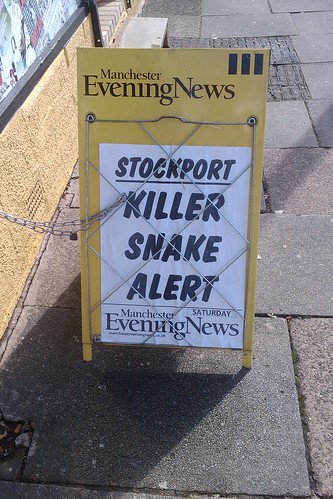
Snake Alert

Snake Alert

I can tell you that this is the most exciting story to come out of Stockport in years.

Wednesday, September 07, 2011

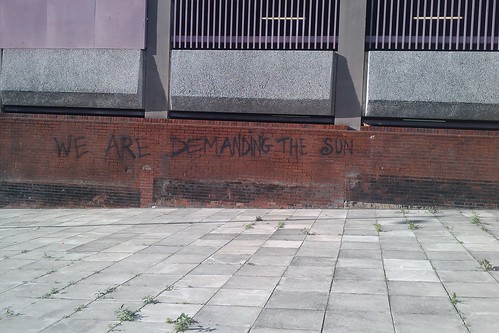
We Are Demanding The Sun

We Are Demanding The Sun 

Mount Pleasant, Liverpool, September 2011

Wednesday, August 31, 2011

99 Problems, But A Pitch Ain't One

Pitch

Edgeley Park from the Cheadle Stand. Note comedy head accidentally photobombing in the lower right.

It's a long time since I went to watch Stockport County. Despite them being my local club, the first football match I ever attended was Fulham away at Chester City in 1996. The second match I attended was Stockport, though, and I went quite a few times during my last year at school and my two years of Sixth-Form College. Those were probably the best years that Stockport have ever had, with players like Alun Armstrong, Mike Flynn, Jim Gannon, Sean Connelly, and Kevin Cooper. In the spring of 1998 I saw them finish 8th in the Championship, two places outside the playoffs for the Premier League.

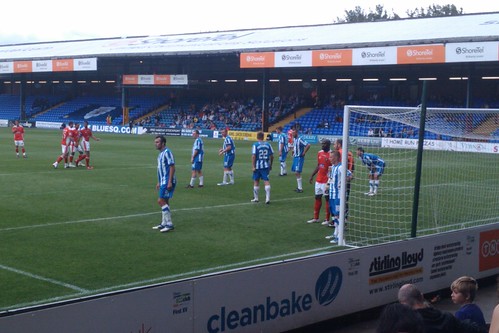
Things are rather different now - last season saw them relegated out of the League for the first time since 1905. This seemed like a good time to return, so a couple of weeks ago me and my Dad went to see them at home to Ebbsfleet United.  I confess to no longer knowing who's who in the Stockport squad - the most familiar name is new manager Dietmar Hamann, the former Liverpool and Germany player.

The game itself was good. While Stockport played the better football, they didn't create many chances - the more direct approach of Ebbsfleet was much more effective, and they were slightly unfortunate not to be at least a goal up at half-time. In the second half, however, Stockport created far more chances, with a string of crosses low across the box from the right going unfinished in increasingly comic/frustrating fashion. Eventually the pressure told, Chadwick heading home from close range after yet another break down the right. That was about 20 minutes from the end, but unfortunately Stockport conceded a soft goal from a set-piece about 10 minutes later, perhaps having lost concentration due to an attempted substitution. While there were more chances for Stockport, none were serious, and the game ended in a 1-1 draw. This was disappointing in that Stockport should really have won easily, but the point put them just outside the playoff places.

Corner

Corner to Ebbsfleet.

It was an enjoyable afternoon, and while I can't promise to be a regular attendee (£16 is fairly expensive to me) I would like to go a bit more often.

Sunday, July 31, 2011

My Favourite Parks Are Car Parks

When I was a teenager, Pulp were My Band. They were the band that made it OK to be me. In some ways they still are. This was proven by going to see their reunion gig in Hyde Park, about a month ago. I had seen them once before, at the Apollo in Manchester in 1998, and missed out on seeing them in Nottingham in 2001 for lack of anyone to go with. The fact that, in addition to my sister (who was the first member of the family to be into Pulp), I would be seeing the gig alongside Rachael T. and Vicky D. (née S.), lent the whole gig a sixth-form air.

I arrived with Rachael and we spent some time drifting between various stages. The first band I paid any real attention to were The Horrors, who I'd never really listened to before, but rather liked, in a Bowie/Psychadelic Furs way. I was left alone for The Hives, who were great fun, and brought back lots of memories of Nottingham in 2001. In particular, Pelle Almqvist's between-song banter was a highlight: "We're The Hives and we're from Sweden! Land of ice and snow, and lots of other shit that you've never heard of!" The new stuff sounded a lot like the old stuff, but I think that's forgiveable for a garage band made good.

TV on the Radio are next on the line-up, but I have no memory of them, and I'm pretty sure this is because I was eating and drinking with the others. I did encourage people back to the main stage, where Grace Jones, who Caitlin had seen before, was doing her malfunctioning-replicant-of-pop act. As Caitlin had promised, Jones did indeed do the hula-hoop for the entirety of "Slave to the Rhythm". Apparently there wasn't room in the setlist for "Warm Leatherette", though, which was a disappointment.

After Jones' set finished, people began streaming past us to gather for Pulp's set. This provided the by-now-standard bit of crowd-based entertainment, as one group of lads passed us with one of them saying worriedly "No, we've done it all - the whole bag!" A noticeable difference between this and the Blur gig a couple of years ago was the good-natured aspect to the crowd - there was no barrage of empty bottles. I'm not saying that this proves that Pulp fans are better people than Blur fans, but, y'know: it does.

Given that Pulp had been away for a decade, it was interesting to see what they now looked like. A feature of 1990s Jarvis Cocker had been his ability to shift from high-cheekboned model to Alan Bennett-esque geek by the simple means of putting on some glasses. These days he sports a hip 1970s sociology lecturer-look, and carries it off well. Nick Banks and Candida Doyle look much the same, but Mark Webber now unaccountably looks like Jerry Lewis. Russell Senior added his usual gothic chill, althogh the razor-sharp cheekbones familiar from the cover of "His 'N' Hers" have been filled out by pies time.

They only had an hour for their set, due to being in the middle of central London, and this meant that they had to focus mostly on the main hits, with little time for delving into the more obscure parts of the back-catalogue. They started with "Do You Remember The First Time?" and "Pink Glove", which are probably my favourite songs they ever did. Rachael made her presence felt early on, with energetic dancing clearing a small space around her. With it being a London festival gig, "Mile End" from the "Trainspotting" soundtrack was a gimmie, as was the Acid House memoir "Sorted For E's and Wizz". A particular highlight for me was F.E.E.L.I.N.G.C.A.L.L.E.D.L.O.V.E. - never a single, but a genuinely excellent track from the seminal album. The only track from the underrated "This is Hardcore" was the title track, with it's bleak evocation of post-fame comedown. This was followed with "Sunrise" a track from the last album "We Love Life". It wasn't a massively well-received album, and there are far better tracks on it than this one, so this seemed like a poor choice, specially with such a constricted set.

By this point, Vicky was becoming increasingly antsy, as her and Andrew were probably going to have to leave early to catch the last train - would they be there for "Common People"? It turned out that they would, just the other side of "Bar Italia", another gimmie for any gig taking place to close to Soho. "Common People" itself was met with the crowd going predictably wild, and Cocker didn't really need to provide the vocals, as everyone else was singing it anyway. A further highlight came just after the song, as Jarvis could be heard saying to Russell Senior "Come on y'grumpy bastard - give 'em a clap!"

All in all, it was one of the best gigs I've ever been to - helped, of course, by the fact that it's one of the only gigs I've been to where I know pretty much all the words to the songs. It's now very tempting to haunt eBay in an effort to find the old singles that I don't have.
Saturday, July 09, 2011

What We Talk About When We Talk About Gloves

One week ago I met Yvette and Dominik in a pub in Wood Green to watch the Klitschko vs. Haye fight. I'd never really watched a boxing match before, but fortunately Yvette was on hand to give some expert opinion. We got there well before the start and bagged a table, which was a good job, as the pub soon filled with aggressive north London blokes.

The fight itself was disappointing as a spectacle, although as it went the full 12 rounds at least no-one could feel they didn't get value for money. It was good to be watching it with someone who knew what they were talking about, but somewhere at the back of the pub there was a guy who kept shouting "JUST FUCKING DO HIM!", so all options were covered. There was some booing in the pub at the points-win being given to Klitschko, but even I could tell that he'd easily had the best of the fight. I'm told there was a small Ukrainian contingent in the pub who seemed to have brought their own vodka, but I don't remember seeing them.

We stayed far too long in the pub afterwards, drinking. During the fight the place had been so crowded and the night so warm that condensation had started forming on all suitable surfaces. This made the men's toilets pretty inadvisable. There was also an Irish guy in there who came very close to accidentally pissing on me rather than into a urinal, and I wasn't sure what the correct etiquette for that situation was.

We were eventually thrown out of the pub at its 2:15 closing time. On the walk back to my sister's flat an urban fox darted across the road some distance ahead of me, so it was all good.

Tuesday, June 28, 2011

People Ask Me Why I Don't Like Coldplay

'Los Gatos'...was also the last thing The Sleepers ever recorded, as the group lost patience with their out-of-control lead singer. "'Los Gatos' shows the effects of speed," says Michael Belfer. "We had to drive Ricky back to his grandparents every night while we were recording; if he went into the city, he'd disappear. One night we tricked him: we said we'd take him to the speed dealer. All five of us were in a Mustang and as we turned down the ramp onto Highway 101. Ricky freaked. We were holding him down but his legs shot out and he kicked the transmission into reverse. There was an incredible bang and the car just coasted. The band just lost it. They dragged him out and beat him up. He was black and blue. He sang 'Los Gatos' just after that."
- Jon Savage, sleevenotes to Black Hole: Californian Punk 1977-80

Friday, June 17, 2011

No Time To Be 21

With age comes the realization that of all William Gibson's protagonists, the one you resemble most closely is Coretti from "The Belonging Kind".

Tuesday, May 31, 2011

Write What You (Don't Really) Know

For the first time in a long time I've gotten around to doing a little bit of non-academic writing. It's only a fragment, but unlike everything else I've done before this is - at least nominally - part of something larger. Long time readers may remember me pondering writing a science-fiction novel set in Athens, and this is the first bit of progress I've made with it. The fragment, called "ANTHINT", is up over at N.A.O.W.F.I.T.

Comments are, as ever, welcome.

Thursday, May 26, 2011

Interpretations

I was clearly wrong in assuming that the American operations had had little effect on this valley - they had freed up the antique smuggling market.

'And what have you found out about the life of this ruined city?'

'I don't understand. What do you mean?'

I tried again. 'Have you found out roughly what the plan of the city was... where the bazaar was, the religious schools?'

'No'

'The smaller mosques, the gardens, the military barracks?'

'No. You are asking difficult questions. We just dig downwards and find a jumble of things. It can be very frustrating - yesterday we dug a pit ten metres wide and didn't find anything worth anything.'

'What did the ordinary houses look like?'

'Like this house - built from mud, but the rooms were very small and crowded, and many of them were multistoried, perhaps because they were built on such a steep cliff. We can sometimes guess which the better houses were from the state of their foundations. But it doesn't help us find the treasure - many of the houses have nothing in them. Nothing at all.'

Abdullah interrupted, 'I think I've found a bathhouse, there were a lot of pumice stones in it and guttering which brought the water up to the ridge from a spring three kilometres away.'

'That is very interesting. Anything else.'

'No.'

'What do you think about the people who lived here?'

'Gamesters,' said Bushire, and everyone laughed in agreement. 'We find so, so many playing pieces like this bronze dice. This old man,' Bushire said pointing to a toothless villager, 'found a whole set of beautifully carved ivory chessmen a month ago, in one of the smallest houses on the hill. Our ancestors weren't Taliban.' The Taliban banned chess. 'And he's just sold a wonderful carved wooden door, one and a half metres high, with tigers and hunting scenes, to a merchant from Herat for a lot of money.'

'How much do you sell these objects for?'

'This,' replied Bushire, holding up the twelfth-century ewer with its bold wave pattern, 'is worth one or two American dollars - good money.'
- Rory Stewart, The Places In Between (2004)